Finished is better than perfect

Are there any quilters who haven’t said “finished is better than perfect” ?

Each of these three quilts showed me once again that despite my best efforts, things don’t always go as planned. What truly matters is how you respond in those moments.

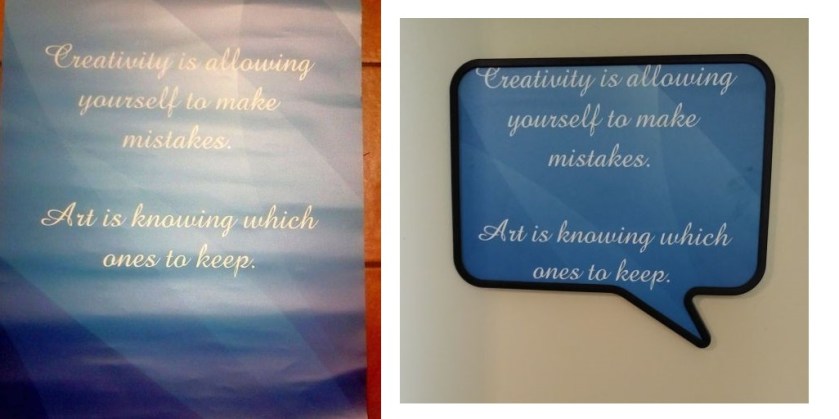
A few years ago, I had a poster printed. I framed it to hang on my sewing room door so I see it every time I walk in the room. It’s a constant reminder to enjoy being creative and accept that mistakes are going to happen. If you want to be a quilter, you’re always striving to get better but you learn pretty quickly that you have to leave perfectionism at the door.

My goal was to turn these unloved tops into useful quilts for people in my community.

When you gift a quilt, the receiver sees kindness, they’re not looking for flaws. That’s reason enough to keep going.
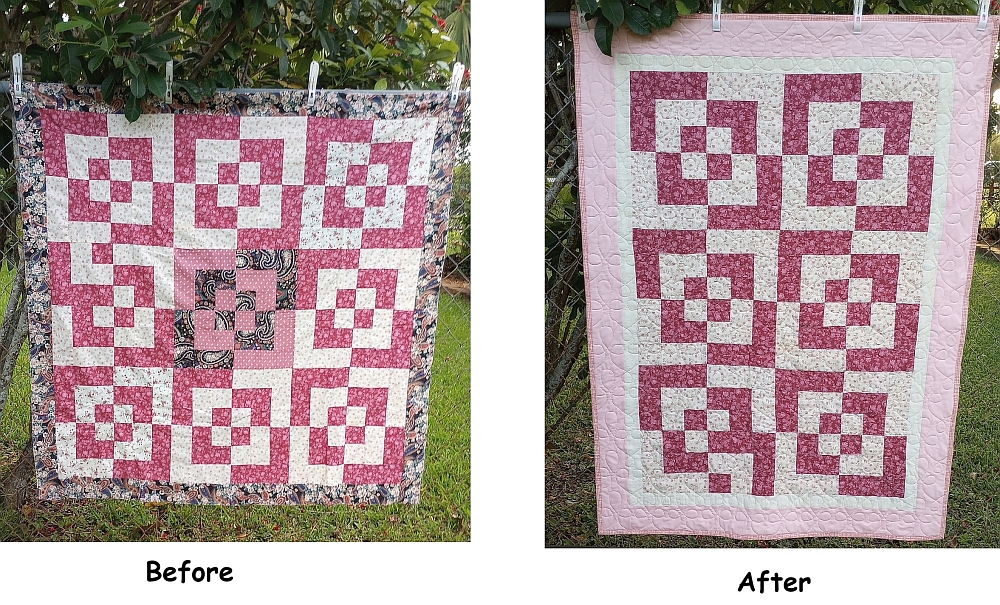
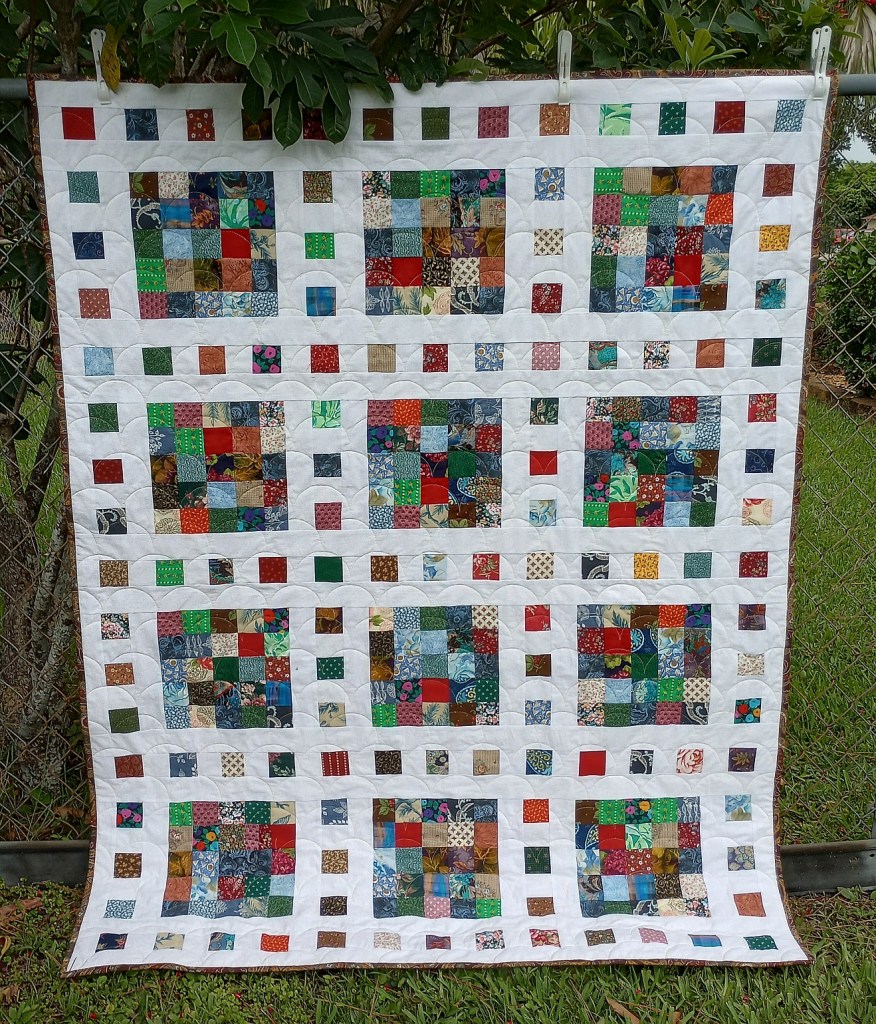
This was a large square quilt. I’ve never made Bento blocks but recognized the pattern. I thought if I kept only the six blocks that had the same fabrics it might look a little less busy and using a soft pink in the border and backing would make it appropriate for a little girl.

Two blocks had red and blue print in the neutral rather than pink. The black paisley in the center block was different that the paisley in the border.

I didn’t notice the piecing mistake in one of the blocks as I was working on it. It’s the second block down in the left column in the “before” photo. When I took the “after” photo I saw it right away. (The bottom left corner in the “after” photo.)

There was no going back at that point. Since I didn’t notice it right away, I’m hoping the recipient won’t either.
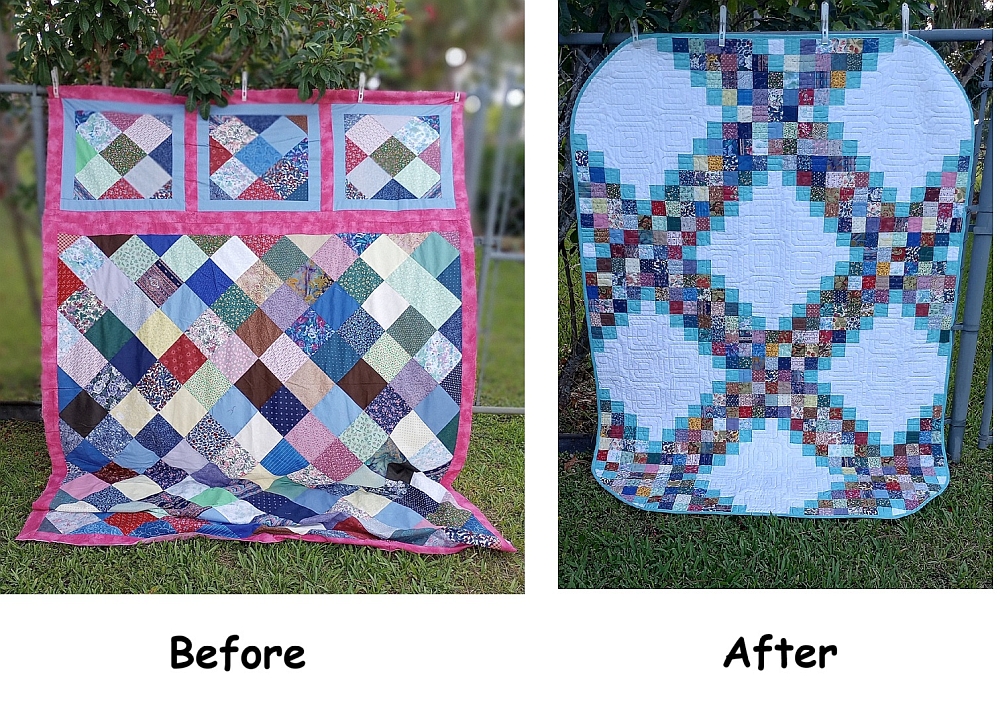
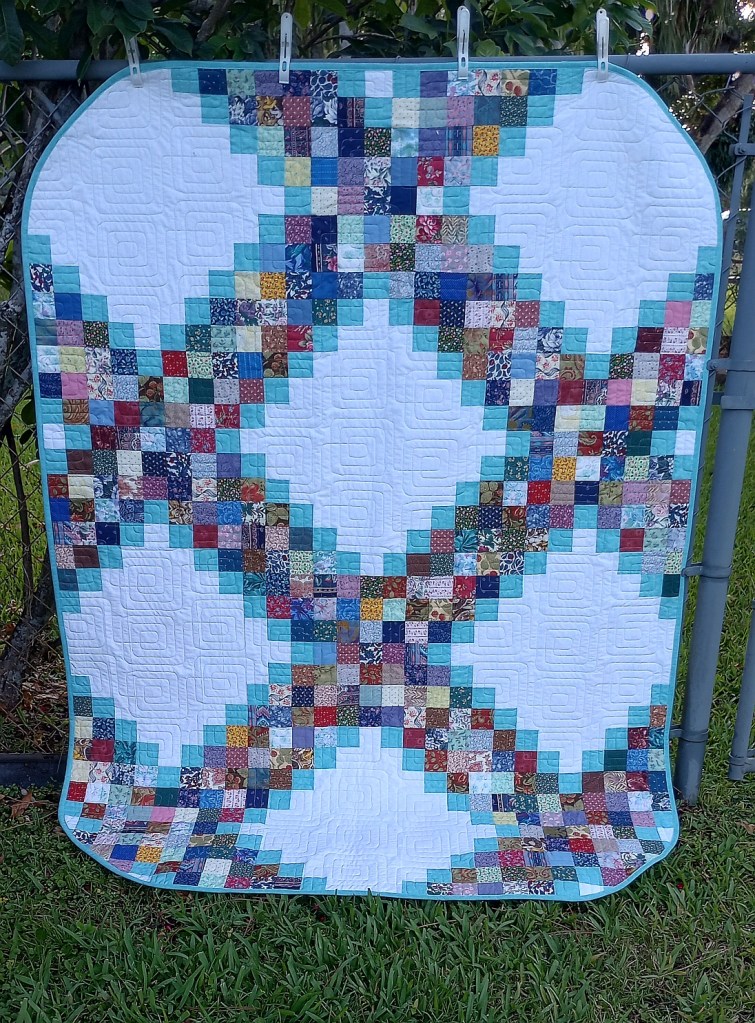
This top had problems both before and after. The original quilt was very puffy in the center. I knew would make it a nightmare to quilt. I took it apart, trimmed the squares to 2 1/2″, and created a triple Irish chain top with the pieces.

Everything went well until I attached the binding and started ironing it over to topstitch. My iron overheated and scorched the backing all the way through to the batting. The next morning my iron wouldn’t turn on at all so I knew it had burnt out and I’d have to replace it. . I prefer a hot iron, but not that hot!

The burnt section was too big to cover with a label, so I removed the binding, rounded the corners to cut off the burnt part, and sewed the binding back on. I’m not completely thrilled with the quilt, especially after all the work that went into making those 81 piece blocks. The disappointment was gone the next day. When I looked at it again I realized that that I was actually pretty lucky that the damage was in the corner. Instead of disappointed, I was grateful that I was able to save the quilt.
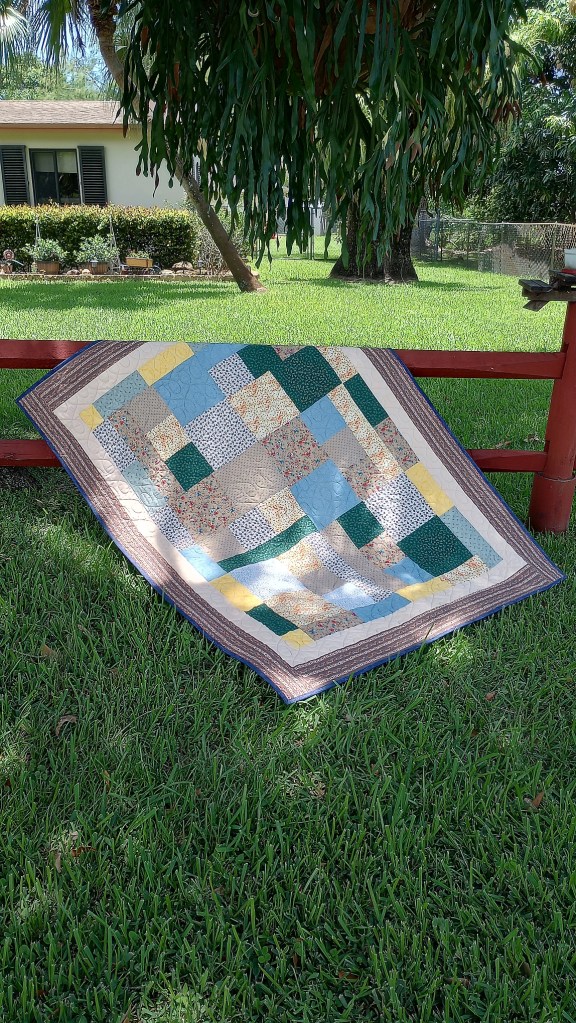
This was one of those first three tops finished before I decided to take “before” photos. The borders were sewn on but never trimmed. It actually made me laugh thinking someone must have been in a huge rush to just stop working on it and leave it like that.

The way the borders had been cut made it a challenge to trim them so they’d be symmetrical. The fabric matched the rest of the quilt top so I wanted to keep them.

I took the borders off, trimmed them to look as balanced as possible and reattached them to the top. After making the pink one above, I was glad to have this one to finish with lots of blues & browns for a boy.

Perfect? Not even close! But, they are finished and that’s a good feeling.

Here’s a recap of all 10 quilts.
Back to basics

This is the last of the original 10 quilt tops saved from the Palm Beach County Quilter’s Guild de-stash table.

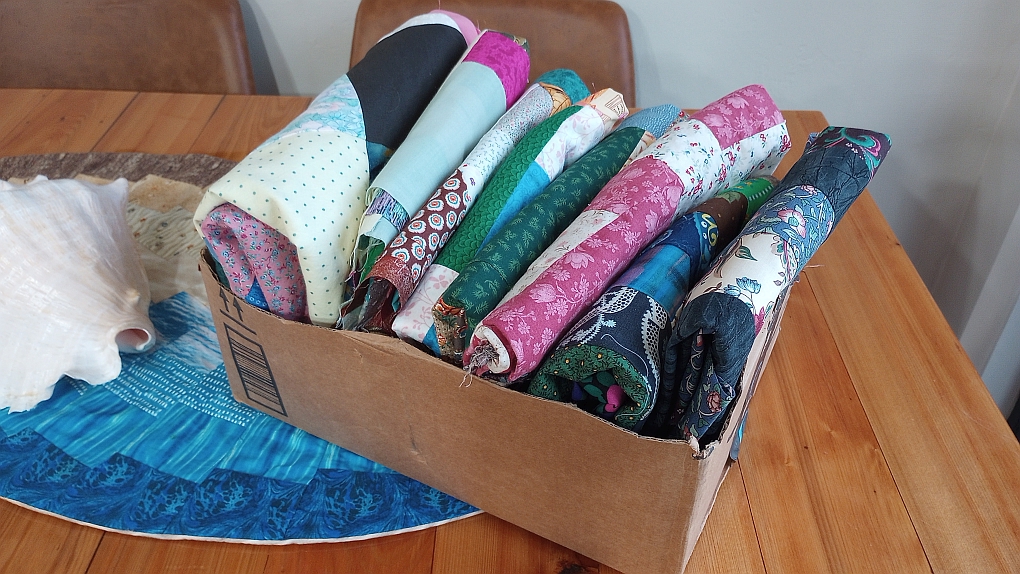
I recently accepted 7 more that had been set aside to use as possible backings. One of them was used to back this quilt. I was given the go-ahead to use them however I wanted, as long as I actually use rather than discard them.

A couple of them will make nice comfort quilts as they are so I’ll simple quilt and bind those. Others are a little plain and oversized. It was a good idea use them as backing for other quilt tops. I’m guessing they didn’t come across any tops in storage that coordinated with the colors and style of fabric. I’ll keep them in the forefront to plan a future quilt top around them, rather than hang onto them and hope the right top shows up… eventually. No rush on these so I’ll work on them between making string quilts.

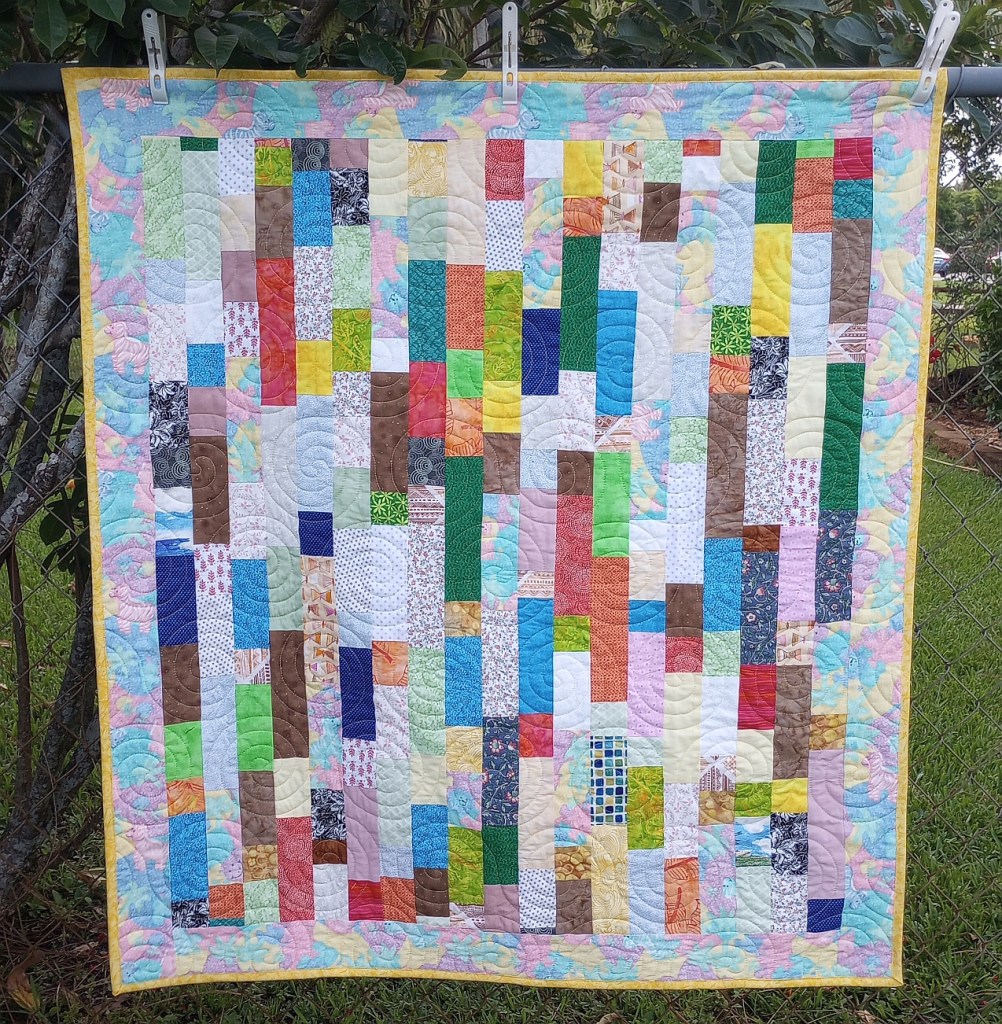
Here’s the before photo of that 10th rescued top. The only issue with it was the autumn fabric used for the border. It didn’t really work with the rest of the top, especially for a child size quit and was an easy fix.

It was lucky that our Outreach coordinator had remembered seeing strips of one of the fabrics using in the top. She located them quickly for me Amazing, considering the massive purge of the guild’s storage unit.
Here’s the after photo.

The quilt probably would have looked better with an inner yellow border. I chose not to add one and here’s where the title of this post comes in.

The founder of the non-profit Back to Basics is a long time member of our quilt guild. Her name is Beverly. If you click on that link, there’s an interesting bit of history about how it all began in 1984.

Beverly mentioned that she really could use more blankets for kids to nap on. She had reason to specifically request that they not be too fancy. I recently asked her what size she preferred. At 40″ x 45″ this quilt is the ideal so her organization is most likely where it will be donated. As the old saying goes “if it ain’t broke, don’t fix it”. I added the child-friendly border but kept it simple just as requested.

The scrappiness of the front made this backing a good fit. It’s now a two-sided quilt. 😉

The backing was a little longer than I needed with an two extra rows of squares. I salvaged those so they won’t go to waste. I already know how I’d like to use them and they’ve been set aside with a notation (so I don’t forget!).

I’m thankful to have plenty of fabric that I love. Some quilters have asked why I spend time taking out seams in order to save every last piece when I have a closet full of fabrics that I prefer. It’s a fair question.

Quilters donate their fabric and quilt tops hoping they will be used, not sold or discarded. Some have passed away, while others have had to give away their supplies because they can no longer quilt. They may never know what happens to their items, but I will . I feel a responsibility to honor them and their gift by using it and not tossing any of it aside.

I’m not going to throw something away just because I may like something I own better, even if it would be easier to do so. While not every quilter may agree, it’s my reason for using every piece I can. It’s my way to pay it forward and create quilts that comfort others.

I’m sure that most of my friends are tired of hearing my favorite quote but it stays with me so, here it is once again.

When I stand before God at the end of my life, I would hope that I would not have a single bit of talent left, and could say, ‘I used everything you gave me. – Erma Bombeck

Makeover madness

Rescued quilt top #9 drove me a little crazy. It wasn’t the quilt’s fault, it was mine. Now that it’s finished, it’s really satisfying to have met that challenge.

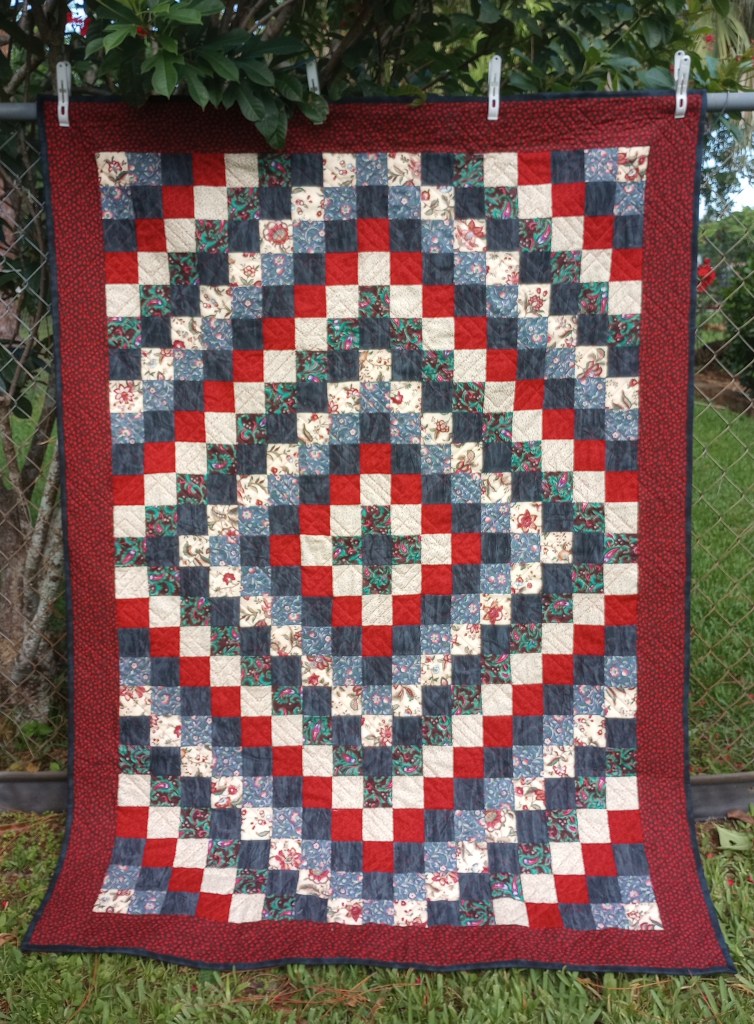
Here’s the before photo. It’s not unattractive, but at 49″x 50″, it may have been difficult to find the right recipient. The aim is to give it a second chance to provide comfort, not to remain in a closet.

Pictured below is the finished quilt which now measures 50 1/2″ x 70 1/2″.

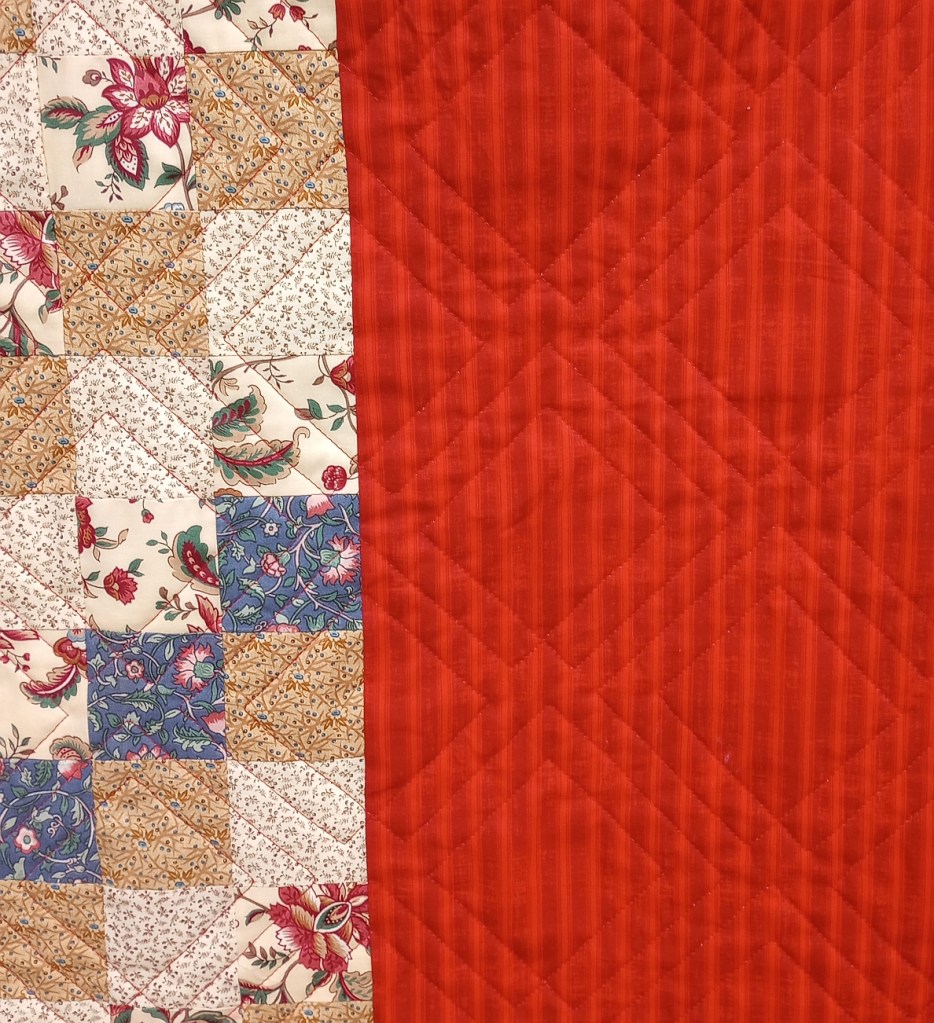
The backing fabric was a red stripe. I took the opportunity to be more creative to increase the width. I want to explore more pieced back ideas in the future.

Vivian, the guild outreach chairwoman, found some extra floral strips in cream that were used on the top that I was able to incorporate into the back. I tried to use a design I hoped would complement the Trip Around the World pattern on the front.

I quickly decided what to do with the first few tops in this group of ten. This one was more challenging, and I changed my mind several times while planning. I’ll just say there was a lot of mumbling going on and leave it at that. 😉

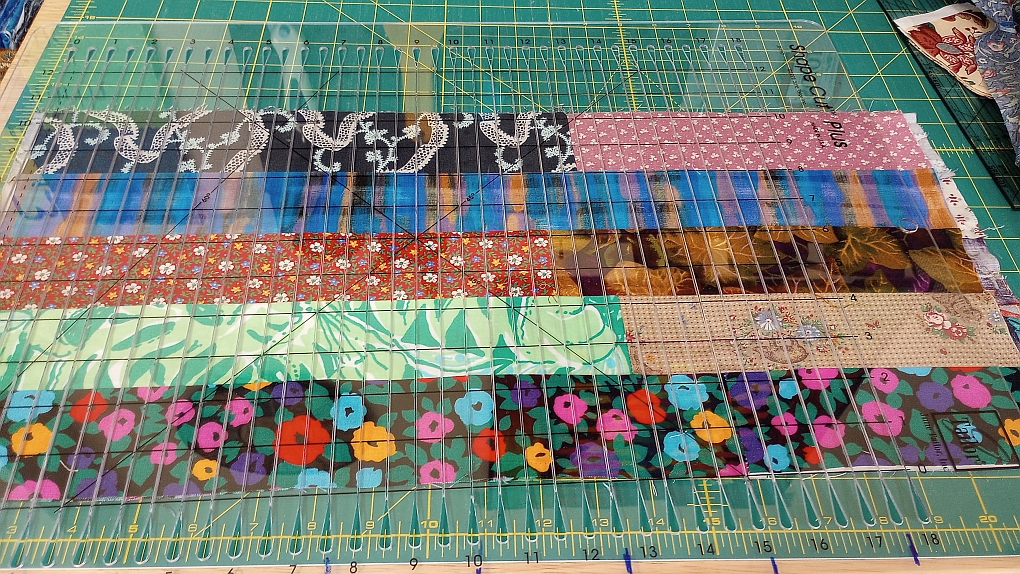
The original pieces were cut to 3″ x 10″. I didn’t want to reduce them to 2 1/2″ and waste fabric, but they also wouldn’t fit in a quilt block that required a 3 1/2″ piece.

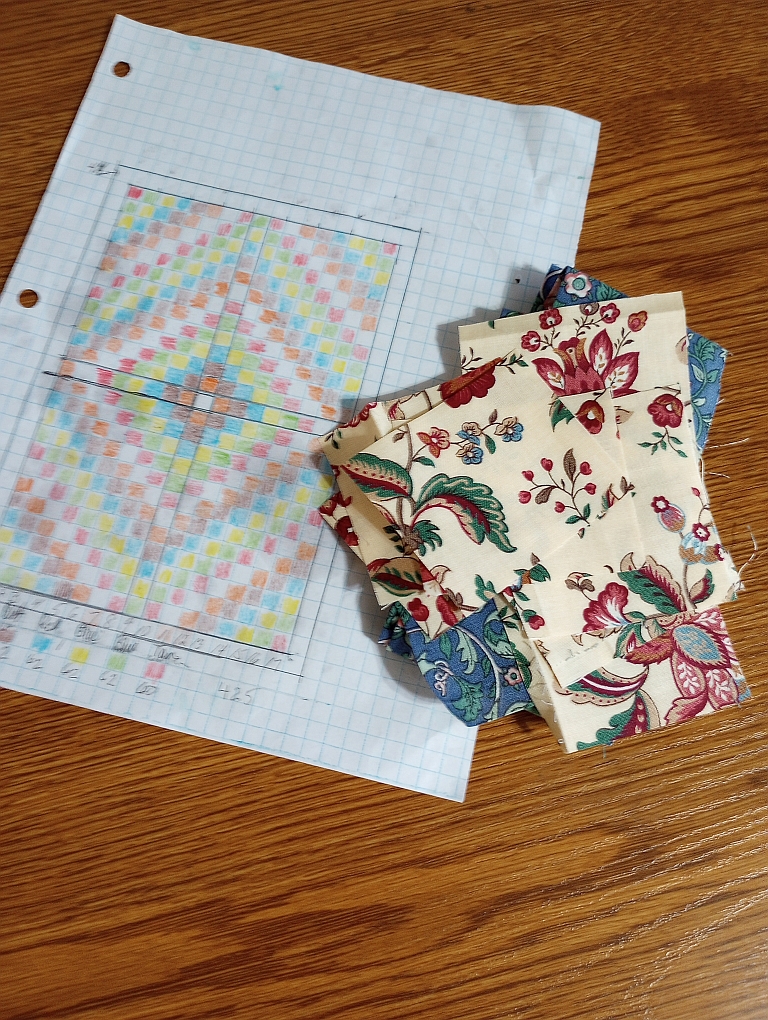
After disassembling the top, I counted the pieces by color and determined how many 3″ squares I could cut.

I took out my graph paper, set up a quadrant, and decided to add two fabrics for the squares and a border. I added a red fabric and a neutral (with a small black and red design) to the pieces I had to come up with the finished size I wanted.

This small pile of leftover squares is all that remains of the original fabric in the top and that makes me pretty happy.

There’s only one top left! It’s small and just needs a different border, so I’m already planning my next quilt.

In the beginning

I didn’t take “before” photos of the rescued quilt tops when I started working on them. I planned to quilt and bind them, regardless of their appearance. There are people in need of quilts who don’t have anything to sleep under. Shelters have asked me to bring my least appealing quilts, explaining that those experiencing homelessness will choose a quilt they think is less likely to be stolen. This perspective opened my eyes! I knew I could find homes for the quilts no matter what they looked like when they were finished.

These quilts are turning out much better than I’d even hoped for and they’re being donated back to the guild for their organization partners.

I haven’t forgotten about the shelter and do plan to prioritize donations to them during the cold holiday season later in the year.

This top just needed minor adjustments, The side seams had to be restitched along the edges where they’d opened and stay-stitched before quilting. There’s a bit of pink fabric in the top but not much. I used a dark brown “tree bark” backing for this quilt in hopes it would make it more gender neutral..

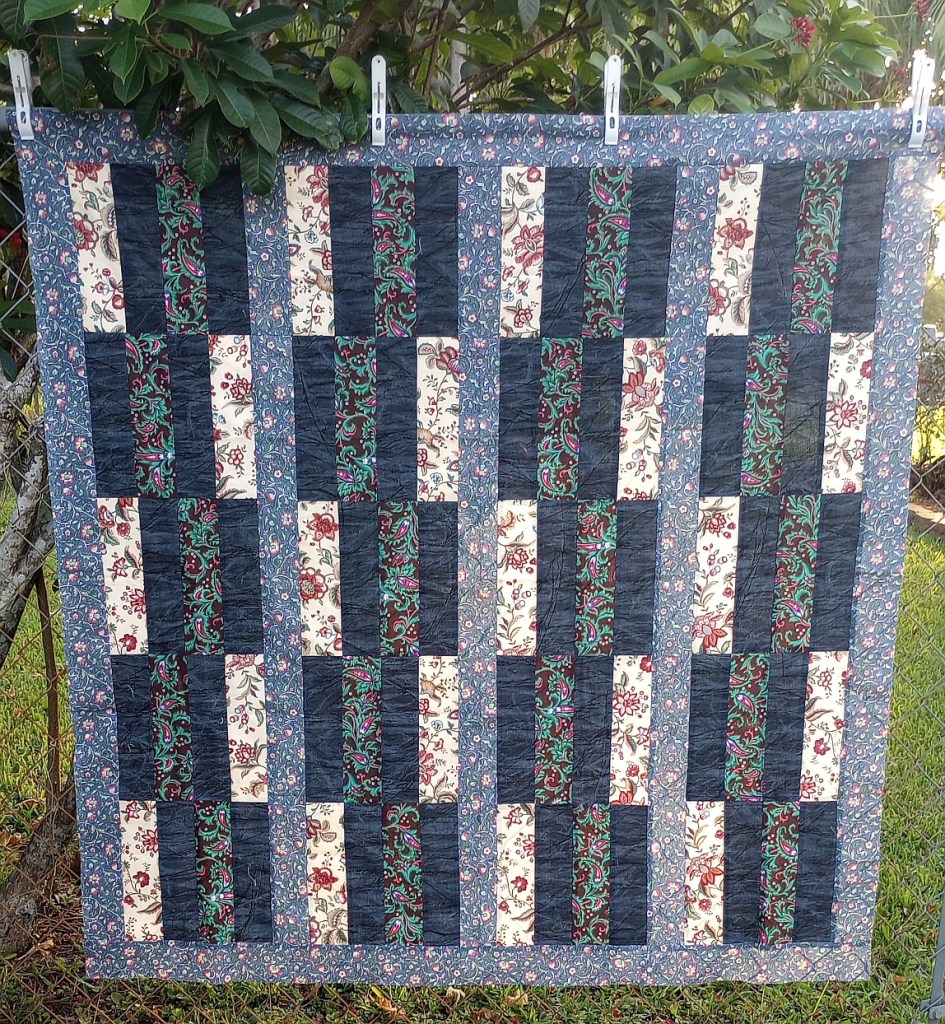
This quilt top looked odd when I first saw it on the table. It was square, but the side fabrics were different widths, as if someone had stopped working on it partway through.

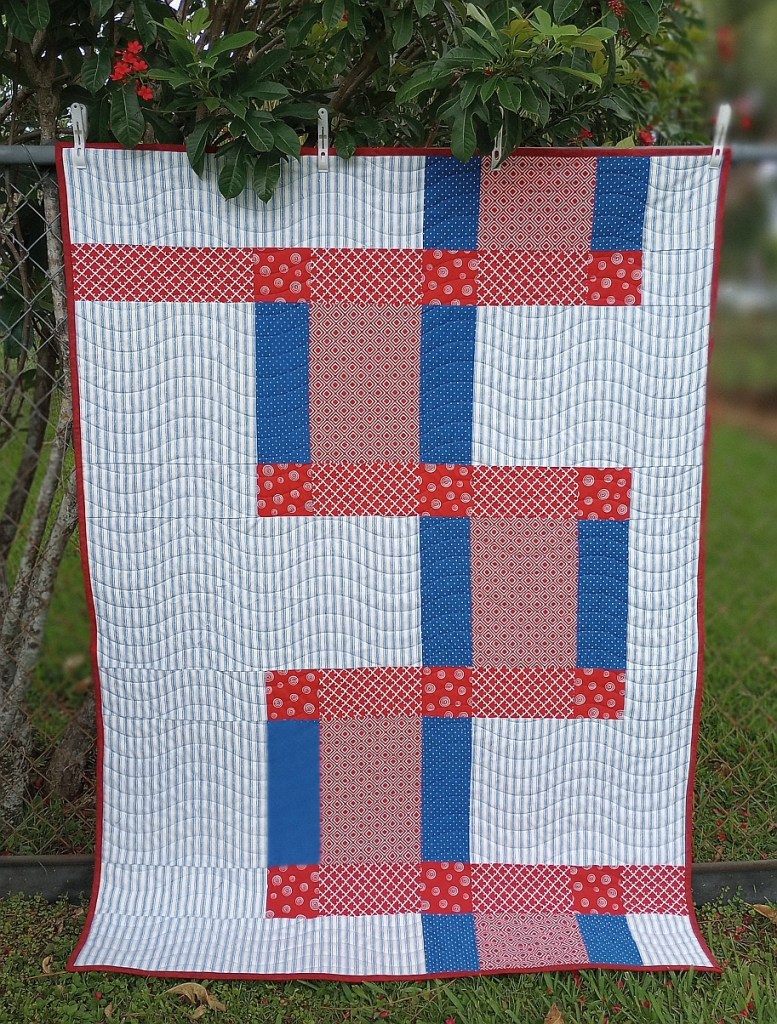
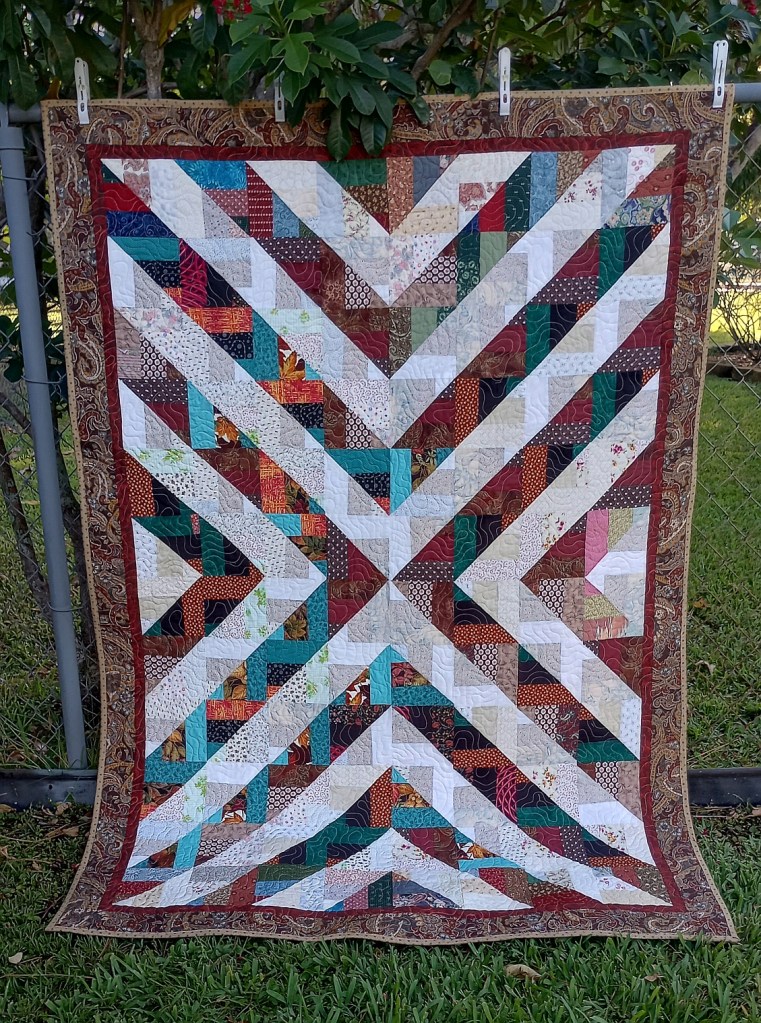
Our guild had request for patriotic quilts to honor veterans at an “Ignite the Night” 4th of July celebration. I took the top home hoping I could make it work. I split one block and moved half to the bottom for more interest. It finished at about 48″ x 68″.

After that quilt meeting, I texted Vivian, the Outreach committee chair, to ask if there were any quilt tops left after the meeting. She said she still had eight more, so I met her the next week at a local quilt bee and brought them home.

A makeover

This is quilt #8 in the Second Chance Quilt series. Not only am I borrowing Wedding Dress Blue‘s term for this group of quilts but this time, also her design idea, Film at Five Quilt.

I began with this Jelly Roll Race quilt top from my quilt guild’s de-stash table. I wasn’t crazy about it, and I’m guessing I’m not the only one which is probably why it was there to begin with, but I thought it had potential.

My goal is to never use the words “it’s just for charity” and instead, do the best I can with what I have, no matter where I think the quilt may end up. This quilt was no exception.


I used Deanna’s Wedding Dress Blue Film at Five Quilt free pattern and tutorial to turn the top into the quilt below. This version required half as many blocks and a lot less work since I began with strips already sewn together. 🙂

The finished quilt measures 52″ x 68″ and I quilted it with a traditional clamshell design.


I began by de-constructing the top in sections of 5 strips. Then I cross cut them into 2 1/2′ sections. I chose to cut them by hand rather than struggle to line them up just right for the Go! cutter.

Then came the problem. When I pieced 5 strip sections together to form the block I realized that the seam allowances in the original top had been inconsistent. The resulting blocks measured anywhere from 10″ to 10 1/2″. I had no choice but to trim all the blocks to 10″ squares.


Of course that threw the sashing off. I love that detail in design so I had to make it work!

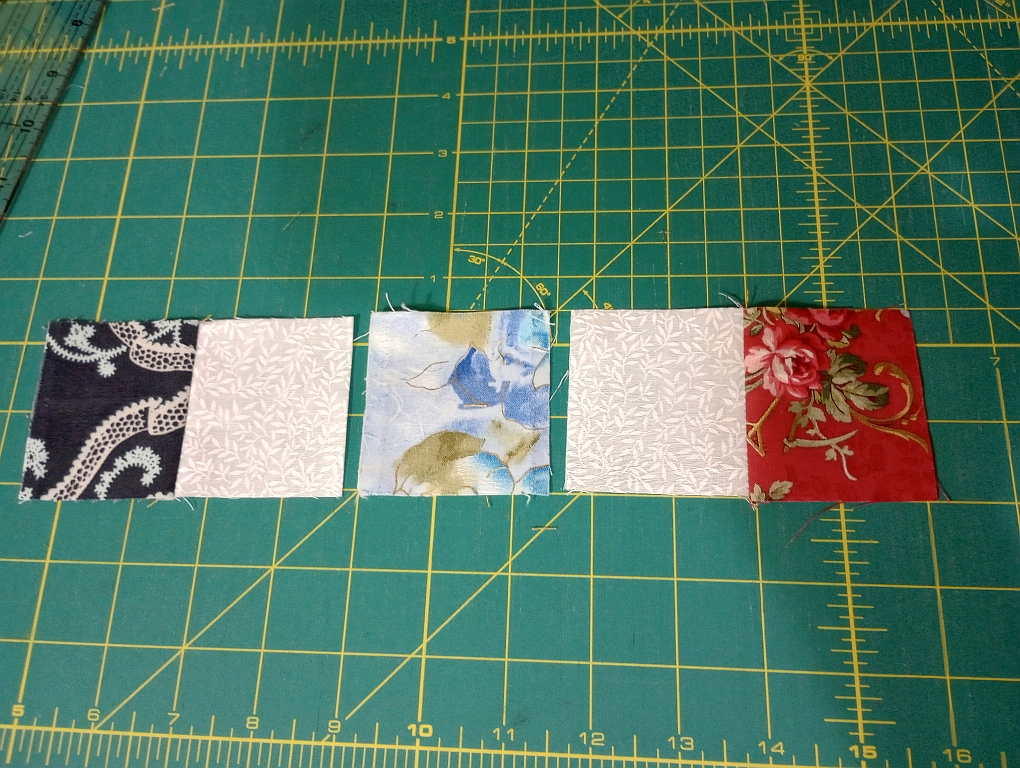
I used leftover pieces and added a 2 1/2″ square of background to make two pieced units. Normally, I’d have sewn the two pieced units together and then added the last print square. Instead, I opted to sew them in the order you see in the left photo above.

I used a 3/8″ seam allowance on both sides of that print square in the middle losing a total of 4/8″ in the sashing strips (2/8″ on each side). This resulted in the unfinished strips measuring 10″, exactly what I needed. You’ll see a slight difference in the dark blue middle square in the photo on the right. It’s not very noticeable in the 31 sashing units unless you know to look for it. (And, you probably didn’t notice until you scrolled back up to check it out, right?)


I’ve only made one Jelly Roll Race quilt myself. It was this one, for my brother’s birthday in 2020. I used a lot of Thimbleberries fabrics, but I gave it a bit more contemporary style by sewing the fabric strips together on the diagonal. I also cut them into half width-of-fabric pieces to mix up the prints a little more. I still had some fall next to each other in the adjacent row. I hate when that happens so it’s the reason I probably won’t use the race quilt method again.


Wedding Dress Blue

Quilting and other things I love in this colorful world